

Sell the Convenience: The Private-Seller Pitch That Wins More Cars

New buyers learn this the hard way. In private party acquisition, the seller does not always take the highest offer. Often they take the easiest credible one, and a dealer who makes the sale feel safe, fast, and certain can win the car when the money is close.
The easiest offer often beats the highest offer
That sounds backward until you think like the person with the keys.
To them, selling a car privately is a chore that keeps growing. They post the car, answer messages, sort through lowballers, wait on no-shows, and repeat details that were already in the listing. Then comes the uncomfortable part. They have to meet strangers, allow a test drive, verify payment, and hope the title work does not turn into a mess.
One of our Acquisition Coaches™ made the point on a dealer call: he once sold a $150 set of golf clubs online, and even that was a pain. Now picture that headache on a car, maybe one with a loan still on it.
There is your opening. The dealer who can make the process feel safe, fast, and certain already has something worth selling.
What are private sellers worried about?
Before you talk price, understand what is already weighing on the seller. Most just want the car sold without regret.
Hassle. The listing turns into another inbox. People ask if the car is still available, then disappear. Others want more photos, a lower number, or a time slot they may not keep. By the time your buyer calls, the seller may already be tired of the process.
Safety. Private sellers do not like handing keys to strangers. They do not love meeting in parking lots. They worry about who is coming, who is driving, and what happens if the test drive gets awkward.
Getting burned. Payment is a real concern. So is the title. So is an offer that changes once someone sees the car in person. Sellers have heard enough stories to know a deal is not done until the money and paperwork are right.
You cannot out-price every buyer in the market. You can remove these fears in one conversation.
Lead with relief, back it with ACV
Good buyers lead with the experience, then back it with a fair offer. Tell the seller how your process works: how long it takes, who they will meet, when they get paid, and what you will handle for them. Then compare it to what the seller is picturing, which may be a long afternoon at a dealership. Thirty minutes is a real advantage when you say it out loud. One buyer running 50 cars a month without a BDC sets that expectation early: "Selling to us takes 30 minutes."
Each of those promises has to be true at your store before a buyer says it on the phone.
Before your buyers make this promise
- Speed: Time three real clear-title appraisals, from arrival to check in hand. If they do not come in around 30 minutes, fix the process or change the number in the word track.
- Safety: Every seller is met by name, by one person, at a set spot. Nobody retells their story.
- Payment: Write one answer for when funds go out on a clear title and one for a car with a payoff. Verify the payoff and pull the VIN before the seller arrives. Every buyer gives the same answer.
- The small things: Decide yes or no on a ride home and on title help. Buyers offer only what the store will do.
If you can get them home after they drop the car, through the service shuttle or a rideshare, or handle the title paperwork with them, tell them. Both cost the store little, and sellers remember them. Explained well, your offer sounds like a way out of the headache.
Put the appointment before the argument
Many private-seller calls start with a price fight. The seller posts a number. The buyer counters. The conversation gets tight before anyone builds trust.
Start the call with the seller's day.
Acknowledge that private selling can be a hassle. Ask what they are trying to accomplish. Confirm the basics on the car, the title, and their timeline. Give them a range based on what they told you, subject to seeing the car, and hold it when the car matches what they described. Then explain exactly what happens if they bring it in.
Price still matters, and how close your offer sits to the asking price still moves how often you buy the car. Give the range, then make the appointment feel like the smart, low-risk next step.
That matters because many sellers do not know what a dealership purchase looks like. They may picture a long sales process, pressure to buy another vehicle, or a slow payment. If your store does not require any of that, say so. Do not make the seller guess.
What should a dealer say to a private seller?
The pitch lands when it sounds built around the seller's day. Keep it simple enough for every buyer to use, and cut any line your store will not deliver.
The word track
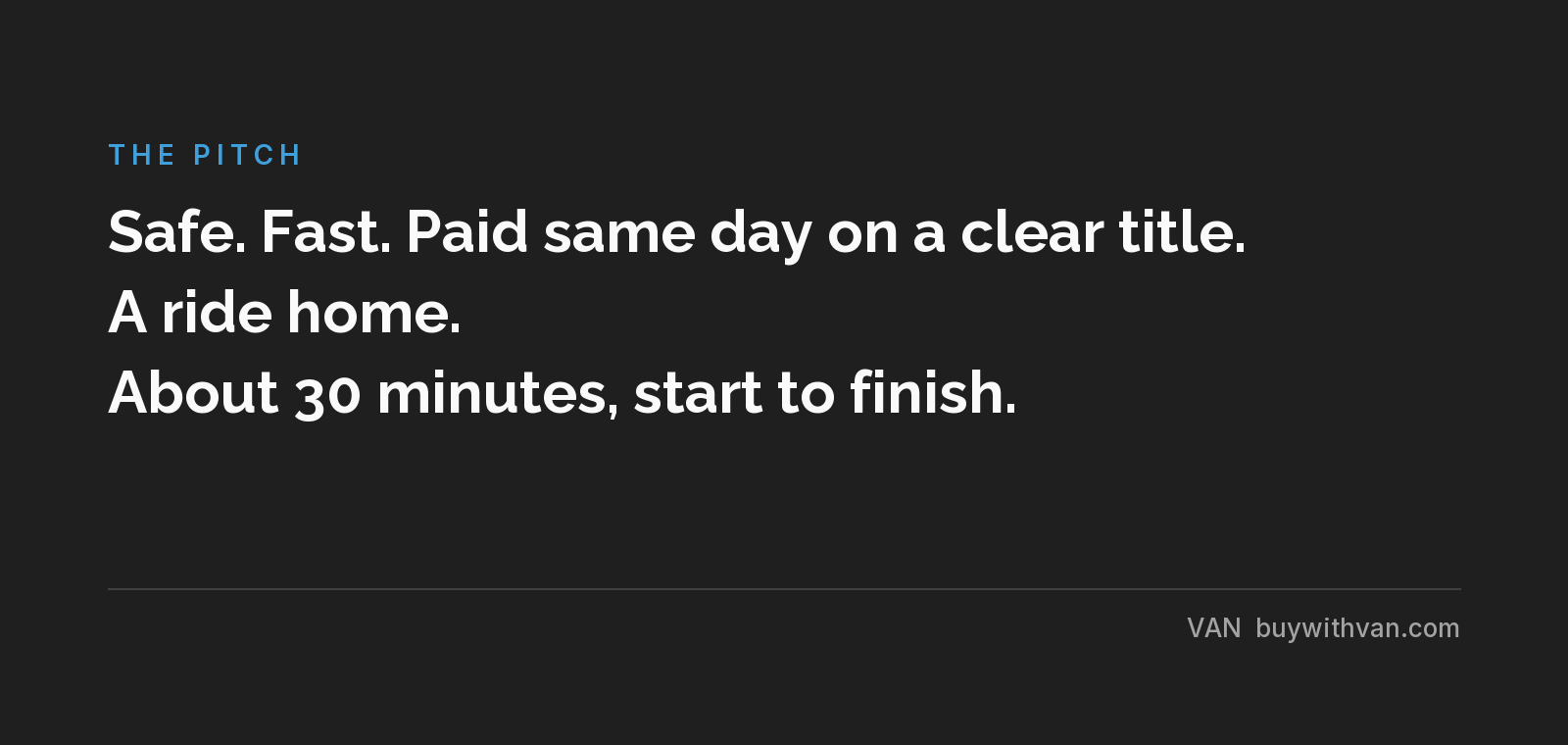
"You've probably had a few people waste your time already. Here's how it works with us. Bring the car, the title or your loan info, every key, and your ID. We look it over and you're usually out the door in about half an hour. No strangers, no parking lots, no guessing on payment. We'll walk you through the paperwork, and if you need a ride home, we can set that up."
That pitch names the pain they already feel and gives them a clean path to be done. It also keeps the buyer in control. The seller starts weighing your store against one more stranger for a few hundred dollars more.
Make the store experience match the phone promise
The convenience pitch only works if the store delivers. A sloppy visit erases the trust the call built.
Make sure the handoff is clean. If you are building a buy center, write the handoff into the process. Before the seller arrives, the appraiser has the VIN pulled, the office has check stock ready and the payoff verified, and every titled owner knows to come. The person greeting the seller should know why they are there, and the seller should not have to retell the same story to several people before anyone looks at the car.
Small frictions add up. Give the seller a place to park, and keep them posted while they wait.
Protect the thirty minutes. If you promised it, keep it. If something will take longer, explain why before the seller has to ask. Silence feels like the old dealership experience they were hoping to avoid.
Say the same payment answer every time. Tell the seller what your store can do, what documents you need, and when they can expect funds. If there is a loan, the store usually pays the lender directly and the seller gets a check for any equity. If they owe more than the car is worth, tell them on the phone.
Build convenience into the store's process
Write the pitch into your private party acquisition process so every buyer on the desk uses it.
Listen for the objections that repeat. Coach buyers on how to answer them without sounding scripted, and track whether the pitch is working in the daily buy center numbers, especially appointments set and shown. Make sure everyone uses the same basic promise around timing, safety, paperwork, and payment. In VAN, buyers text and call sellers from inside the platform, and every conversation lives on the vehicle's page, so whoever picks up next can see what the seller was already told.
Someone in the market can always pay more. Very few can also promise a safe, thirty-minute sale with the title handled. In our experience, the dealers who buy the most cars off the street make selling to them feel like the easiest decision the seller will make all week.
That is the pitch: a cleaner path from listed to sold.
Frequently asked questions
Why do private sellers sometimes take a lower offer from a dealer?
Selling privately is a chore for most owners: answering messages, waiting on no-shows, meeting strangers, allowing test drives, verifying payment, and handling title work. A dealer who makes the sale feel safe, fast, and certain removes that hassle. When the money is close, many sellers choose the easiest credible offer over the highest one, because a clean path to being done is worth more than a small bump.
What are private sellers worried about?
Three fears tend to weigh on a private seller. Hassle: the listing becomes another inbox of lowballers and no-shows. Safety: handing keys to strangers and meeting in parking lots. Getting burned: payment problems, title trouble, or an offer that changes once someone sees the car in person. A dealer cannot out-price every buyer in the market, but a buyer can remove these fears in one conversation.
What should a dealer buyer say to a private seller?
Lead with the experience, then give a range based on what the seller told you, subject to seeing the car. A simple word track: bring the car, the title or loan info, every key, and your ID; we look it over and you're usually out the door in about half an hour, with no strangers, no parking lots, and no guessing on payment. Offer a ride home only if your store provides one.
Does price still matter when you sell convenience?
Yes. How close the offer sits to the asking price still moves how often a dealer buys the car. Convenience does not replace a fair offer. It gives the offer a reason to win when the money is close, for example against another buyer offering a few hundred dollars more, because selling to the store feels easier and safer.
What has to be true at the store before buyers make the convenience promise?
Time real clear-title appraisals from arrival to check and confirm they land around 30 minutes. Have one person meet each seller by name at a set spot. Write one payment answer for a clear title and one for a car with a payoff, and use it every time. Decide in advance whether the store offers a ride home and title help, and have buyers promise only what the store will do.
See it in your market
Request a demo and we will show you the private-seller cars listed in your market right now.
Or call 855-952-4949.