

One of the most common conversations I have with dealerships goes something like this:

Tom Gregg
4
min. read
Stop Gambling: Build a Buy Center That Survives Turnover
7:29
Insights from David Long, COO of VAN, a 42-year automotive industry veteran who has helped open more than 100 buy centers
Most dealerships are one resignation away from their vehicle acquisition strategy collapsing.
You find a great buyer. They source 25 units a month. Margins are healthy. The used car manager is thrilled.
Then life happens.
The buyer moves away.
They get a better offer.
Or they simply burn out.
Suddenly, your private-party pipeline goes dry.
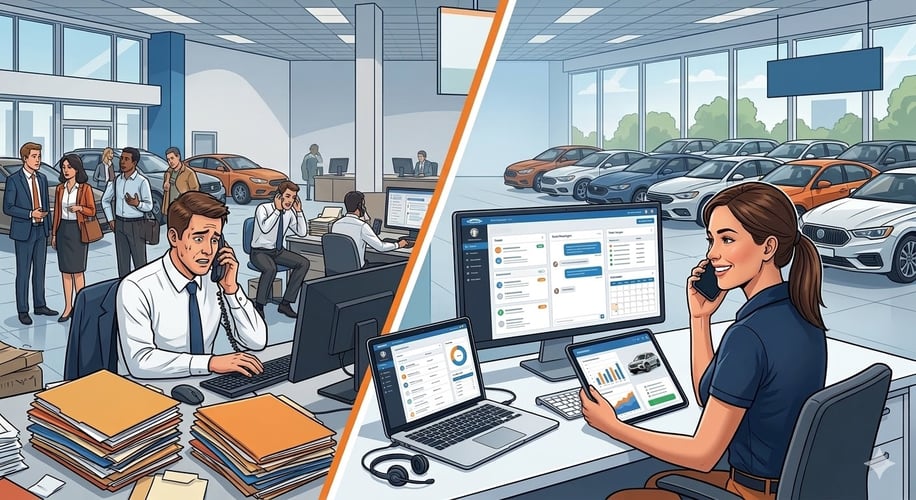
That’s because most buy centers are built around people, not processes.
If your acquisition strategy collapses the moment one person walks out the door, you don’t have a department—you have a single point of failure.
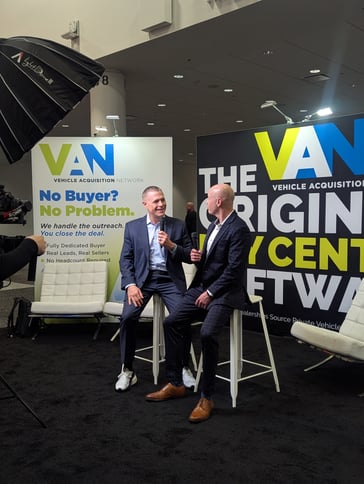
I recently sat down with our COO, David Long—a 42-year automotive veteran who has helped launch more than 100 dealership buy centers—to discuss how dealers can move from a people-dependent model to a system that survives turnover.
The 6–12 Month Reality Check
In today’s market, the statistical shelf life of a dedicated buyer is often six to twelve months.
That’s not because buyers lack talent. The role is demanding: high outreach volume, constant rejection, and a competitive hiring market.
As David puts it:
“Do you really want to build a department—change your phone tree, change your processes—for someone who might only be there six to twelve months? That’s not a sustainable strategy.”
Turnover in the buyer role isn’t just possible—it’s probable.
The dealerships that succeed in private-party acquisition assume from day one that the role will eventually turn over. They design their systems accordingly.
1. Create a Backfill Role
Every buy center needs a backup operator.
David describes this as someone who can step in and keep the department alive when the primary buyer is unavailable.
This person doesn’t need to live inside the platform every day, but they should be cross-trained enough to:
- Monitor incoming leads
- Respond to sellers
- Maintain outreach momentum
- Keep searches and filters active
In many stores, this role might be filled by a:
- Delivery coordinator
- BDC rep
- Service assistant
- Assistant used car manager
The goal isn’t perfection. The goal is continuity.
When your buyer goes on vacation—or leaves entirely—the pipeline keeps moving.
The Two-Person Model
Some stores go a step further and implement a simple “buddy system.”
Two people share responsibility for acquisition activity so the department never relies on one individual.
Even if only one person is dedicated full-time, partially training a second employee creates redundancy that prevents the pipeline from shutting down.
As David explains, the goal is to plan for when—not if—someone goes down.
2. Create a Career Ladder: ATM → AM
One of the biggest reasons buyers leave is simple:
They don’t see a future.
If the role feels like “the person who sends messages all day,” turnover becomes inevitable.
David recommends building a defined career ladder within the acquisition department.
ATM — Acquisition Team Member
The ATM focuses on the top of the funnel:
- Outreach to sellers
- Lead engagement
- Volume and activity
- Initial conversations
AM — Acquisition Manager
The AM owns the entire transaction:
- Appraisal
- Negotiation
- Offer presentation
- Paperwork and deal completion
This structure accomplishes two things.
First, it gives ambitious employees a path forward.
Second, it builds a leadership pipeline for the dealership.
By the time someone becomes an Acquisition Manager, they’ve developed appraisal skills, negotiation experience, and acquisition instincts—making them strong candidates for future Used Car Manager or Sales Manager roles.
Talent Doesn’t Always Look the Way You Expect
One of David’s most memorable success stories came from a former porter named Jhustin.
Jhustin was transferred into the buy center against David’s recommendation. He was quiet, not particularly outgoing, and didn’t resemble the typical sales personality.
But once he started working with private sellers, everything changed.
Jhustin became one of the most productive buyers David ever managed.
He averaged 4 acquisitions per month and went from earning $13 an hour to over $110,000 in his first year.
His secret wasn’t charisma.
It was relentless activity and discipline.
For dealerships building acquisition teams, the lesson is simple: work ethic and commitment to the process often matter far more than personality.
3. Scale Based on Capacity, Not Crisis
Many dealerships wait until someone quits to start recruiting.
By then, the damage is already done.
David recommends using activity metrics as an early warning system.
“People quit before they quit.” — David Long
Activity metrics often reveal disengagement weeks before a resignation happens.
When outbound calls, seller contacts, or appointments begin to decline, it’s often the first signal that leadership should begin preparing for a replacement.
Dealerships should also define growth triggers for adding new acquisition staff.
For example:
When private-party acquisition generates $50,000-$80,000 in monthly gross profit, the store unlocks the budget for another hire.
This turns hiring into a data-driven decision rather than a reaction to a crisis.
David also recommends treating the acquisition department as a business inside the business—with its own revenue goals, expenses, and performance metrics.
4. Put the Playbook on Paper
A buy center fails when the strategy lives inside one person’s head.
When that person leaves, the entire system leaves with them.
Top-performing dealerships prevent this by building a documented acquisition playbook.
That playbook includes:
- Outreach messaging templates
- Follow-up cadence
- Search parameters
- Appraisal workflows
- Offer presentation scripts
When the process is documented, the dealership—not the employee—owns the knowledge.
But according to David, the real power of documentation goes deeper.
“It’s not even about the process. It’s about the belief, the buy-in, and the singleness of purpose.”
When everyone agrees on how the department operates, the team develops clarity and discipline.
Everyone pulls on the same rope.
Build Institutional Knowledge
The strongest buy centers build institutional knowledge.
Processes are documented.
Training materials exist.
Word tracks are standardized.
Some organizations even maintain:
- Training videos
- Playbooks
- Flashcards for messaging and word tracks
When everyone understands the process, the department becomes resilient.
Losing a buyer may still hurt—but it doesn’t break the system.
Smarter Sourcing. Stronger Buy Centers.
If your acquisition strategy only works when the right person is sitting in the chair, you don’t have a strategy—you have a gamble.
The dealerships seeing the most success with private-party acquisition aren’t relying on individual talent. They’re building repeatable systems, documenting their processes, and using technology to keep the pipeline flowing regardless of staffing changes.
If you're interested in seeing how dealerships are building acquisition systems that produce consistent results month after month, book a demo with VAN to learn how the platform and coaching program support modern buy centers.
For the current version of this playbook, read how to build a dealership buy center. The sourcing and follow-up it describes run on VAN's buy center software.