
Industry
Dealer Group Store · Subaru · Elk Grove, CA
Challenge
Before Lithia & Driveway acquired Elk Grove Subaru, its used-car department leaned entirely on the auction — losing roughly $1,800 a car, billing its own service department a discounted internal rate, and running wholesale at a loss. It was a supply problem disguised as a used-car problem.
Results
Within months, every department moved at once: used-car retail climbed from 35 to 86 cars a month, front-end gross swung from a ~$1,800 loss per car to a profit, wholesale went from a monthly loss to about +$20K, and organic used-car leads roughly doubled to 1,500–1,600. The direct cross-department lift runs on the order of $4.8 million a year.
Powered by
Managed Buyer
Elk Grove Subaru
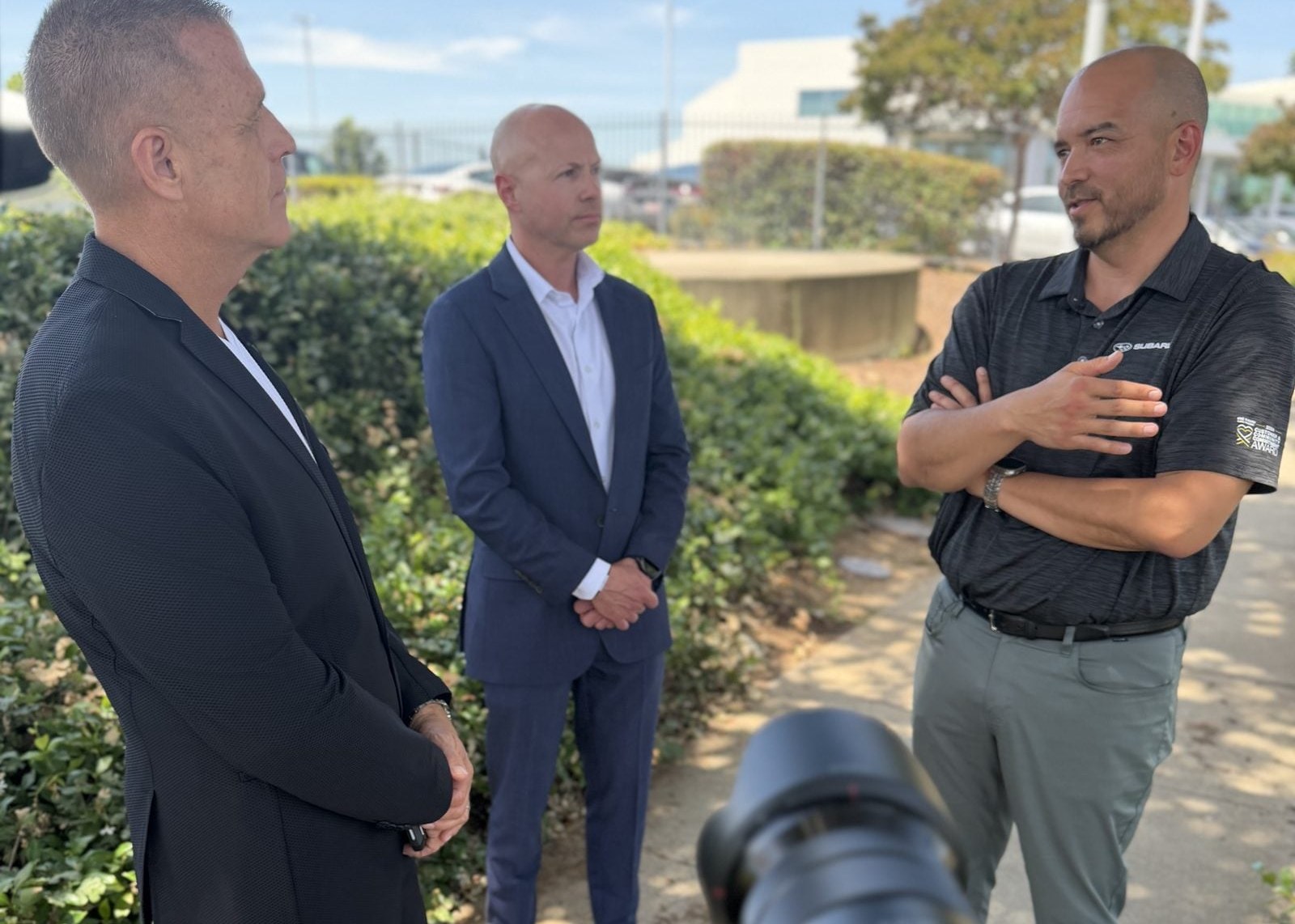
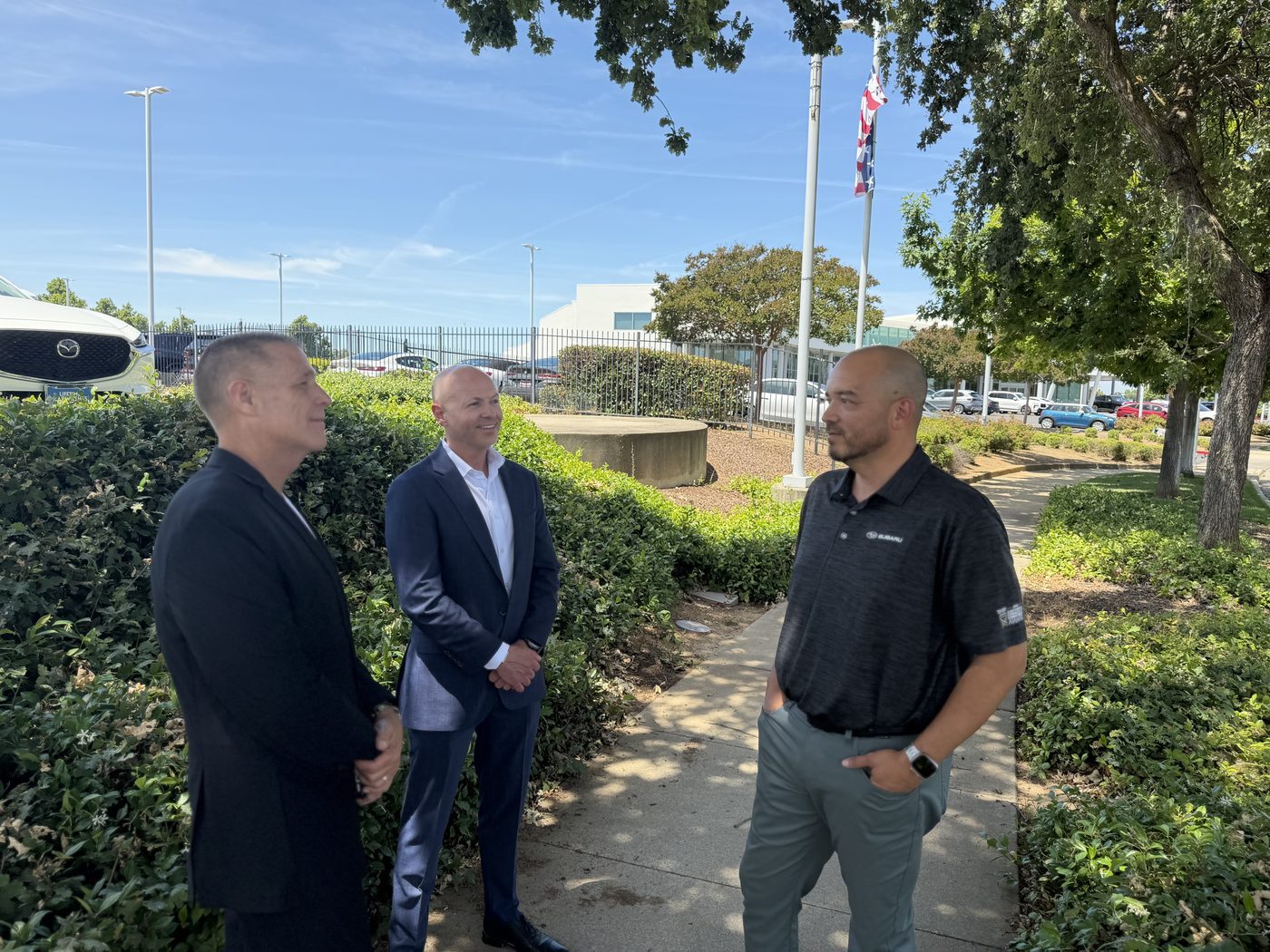
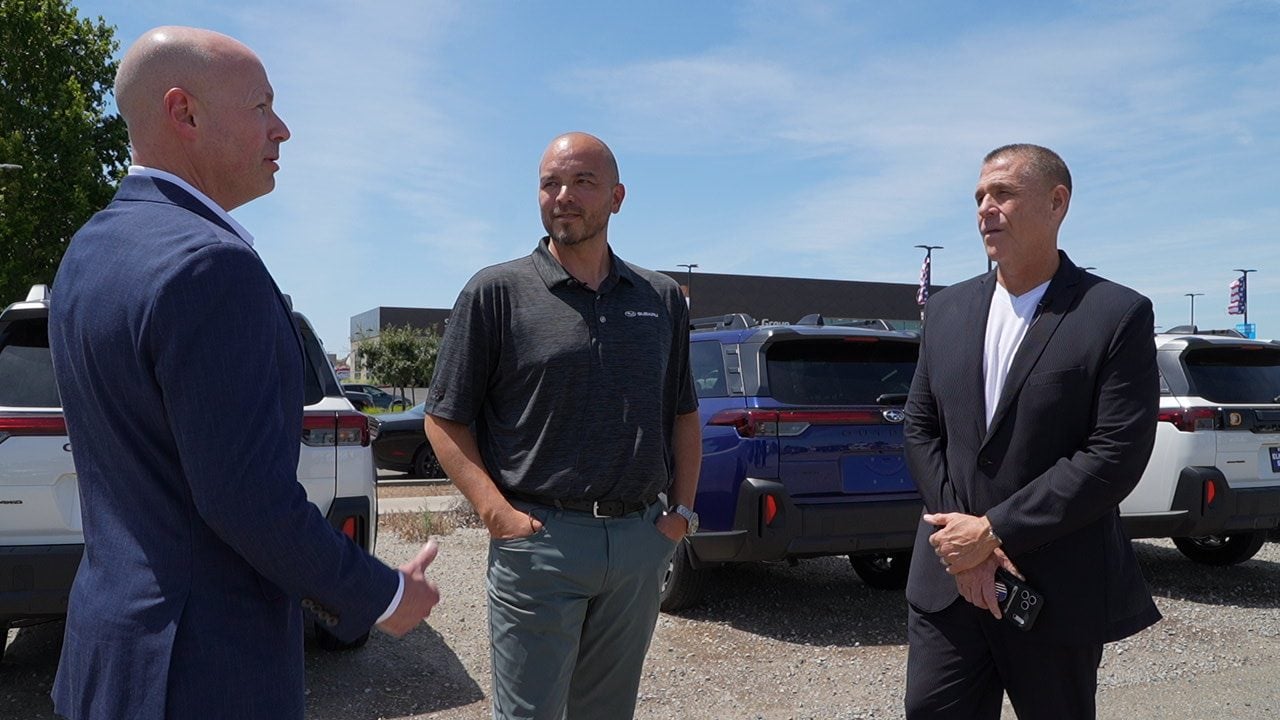
Elk Grove Subaru is a Subaru dealership in Elk Grove, California, part of the Lithia & Driveway (NYSE: LAD) group, in the Sacramento metro. Under General Manager Charlie Zink, the store rebuilt its used-car operation around proactive private-seller acquisition with VAN — and moved every department in the same direction at once.When Lithia & Driveway acquired Elk Grove Subaru in March 2025, its used-car operation was a whole-store problem. New General Manager Charlie Zink made one decision before anything else — replace the auction with proactive private-seller acquisition — and moved every department’s P&L in the same direction at once.
The challenge: a supply problem disguised as a used-car problem
The month before the change in ownership, Elk Grove Subaru retailed 35 used cars and lost roughly $1,800 on every one. The service department billed used-car reconditioning at a discounted $120 an hour internal rate instead of the $229 retail door rate, quietly burying its own service profit. Wholesale ran at a loss. For used inventory, the store leaned on the auction — it wasn’t proactively buying from private sellers at all.
The decision: replace the supply line
Charlie’s first move as GM wasn’t a tweak. It was a new supply line for the whole store.
“We’re never using the auction again ever.”
Auction guys kept visiting — “hey, why haven’t you been buying cars?” — and Charlie’s answer never changed: “I’m Charlie. I’m the new GM. We don’t do that anymore.”
The keystone: the right inventory at the right price
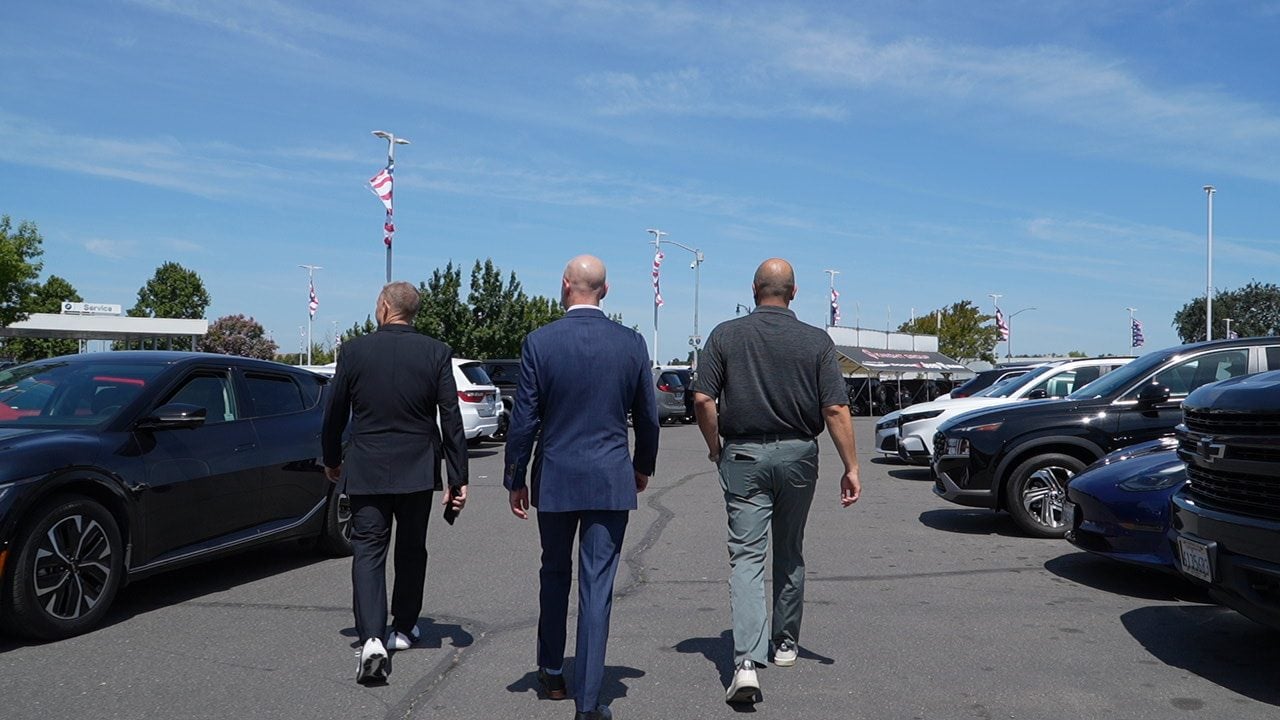
The “one aspect” is proactive private-seller acquisition — not auction inventory, not only clean late-model trades, but the full market: work trucks, high-mile sedans, off-pattern luxury, enthusiast cars. Anything Charlie can buy right.
“If I can buy it right, I can sell it. That’s it.”
A car bought right gives the store options: retail it, wholesale it, run recon at the door rate, create parts tickets, give F&I another delivery, merchandise something shoppers can’t find anywhere else. A car bought wrong takes those options away.
The financial cascade, department by department
Volume. Used-car retail climbed from 35 to 86 cars a month — about 2.5×. The acquisition engine moved so fast it outran the shop; the used-car department, as Charlie puts it, “broke” because it couldn’t recondition fast enough.
Front-end gross. Private-party cars come in with $2,000 to $3,000 more front-end gross than auction cars — Charlie’s own number. Against a starting point of a roughly $1,800 loss per car, that’s the difference between volume that punishes the store and volume that funds it (~$2.58M/yr at the midpoint on 86 cars).
Service. Ending the discounted internal rate means every recon hour now bills at the full $229 door rate. Internal gross, Charlie says, went up more than three times.
Wholesale. The desk went from losing $15,000–$20,000 a month to making about $20,000 — a swing of roughly $35,000 a month.
F&I & leads. Backend gross scales with the added units, and rare inventory roughly doubled organic used-car leads, from 800 to 1,500–1,600 a month. Add the direct annualized lift across front end, service, wholesale, and F&I and it lands on the order of $4.8 million a year — before counting the doubled lead flow.
One car, the whole thesis: the Mercedes GLE
The morning VAN visited, Charlie acquired a 2018 Mercedes-Benz GLE — and it came in the way every car now comes in. The car had been listed online for about three months; the seller was asking $20,000 (raised from $18,000) and told callers his floor was $16,000. One of Charlie’s two dedicated VAN Managed Buyers, German V., didn’t argue the number on the phone. He simply kept following up — a logged cadence of calls and messages across nearly 90 days, from the March listing to the June appointment, until the seller finally agreed to come in. That kind of persistent, logged follow-up is the part most acquisition strategies never survive.
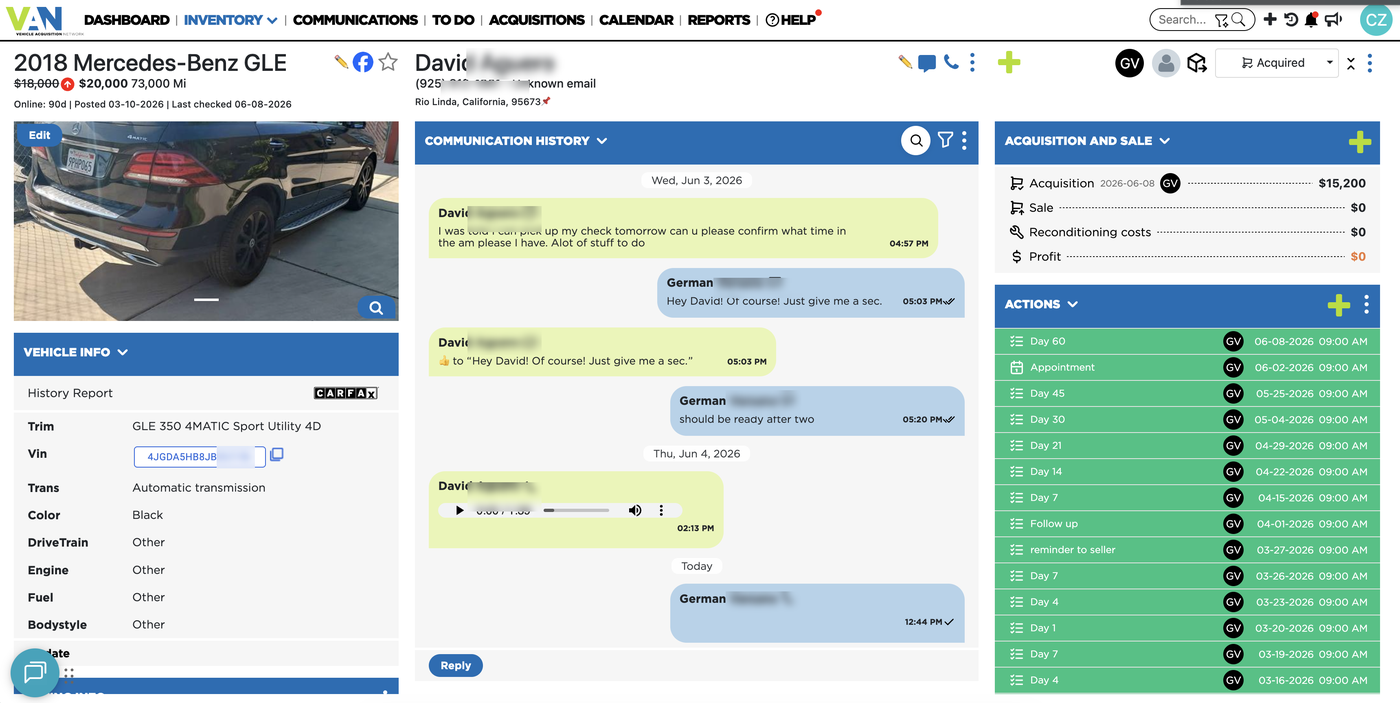
The acquisition record for the GLE — German’s logged follow-up from the March listing to the June appointment, where Charlie bought the car for $15,200. Seller contact details redacted.
When the seller came in, Charlie did the rest in person, honestly:
“Your car’s not what you said it was. We can agree on that, right? I can’t agree on the price you want, because your car’s not what you said it was.”
The seller sold the GLE for $15,200 — below the $16,000 floor he’d given over the phone, thousands under his $20,000 ask — and left whole. Charlie bought it right: even if it never retails, it makes money, because the gross was built in at acquisition.
The managed buyers who make it possible
The mindset, the discipline, and the execution are Charlie’s. But he’s the first to say the keystone decision doesn’t run on a sales floor alone.
“I couldn’t do VAN if I didn’t have these buyers. The idea of [my salespeople] going through there — it’s not gonna happen. They’re focused on selling cars.”
Efren and German are VAN Managed Buyers. VAN hires, trains, and manages them; they work Elk Grove Subaru’s private-seller market full-time — sourcing, outreach, offers, follow-up, and appointment-setting — while Charlie and his team work the appraisals and close. The program flexes to the dealer: some want their buyers negotiating to a target before anyone drives in; Charlie wants the opposite — bring everyone in, every car. See how the VAN Managed Buyer Program works.
Two side effects dealers recognize
The Corvette. A private seller came in to finish selling Elk Grove Subaru his 2020 Nissan Rogue, then asked the question every seller asks: “How do I get home now?” He looked across the showroom, pointed at a 2015 Corvette with 2,000 miles the Managed Buyers had brought in, and drove home in it. Charlie says roughly ten of those happen a month — sellers who came in to sell a car and left in one.
The work truck. Charlie’s parts manager needed a truck; his old one had 300,000 miles. The Managed Buyers bought a 2008 Ford F-250 with 70,000 miles from a private seller for under $10,000. That’s the parts truck now — a vehicle most dealers would never engage with, earning its keep for the rest of its working life.
What’s next
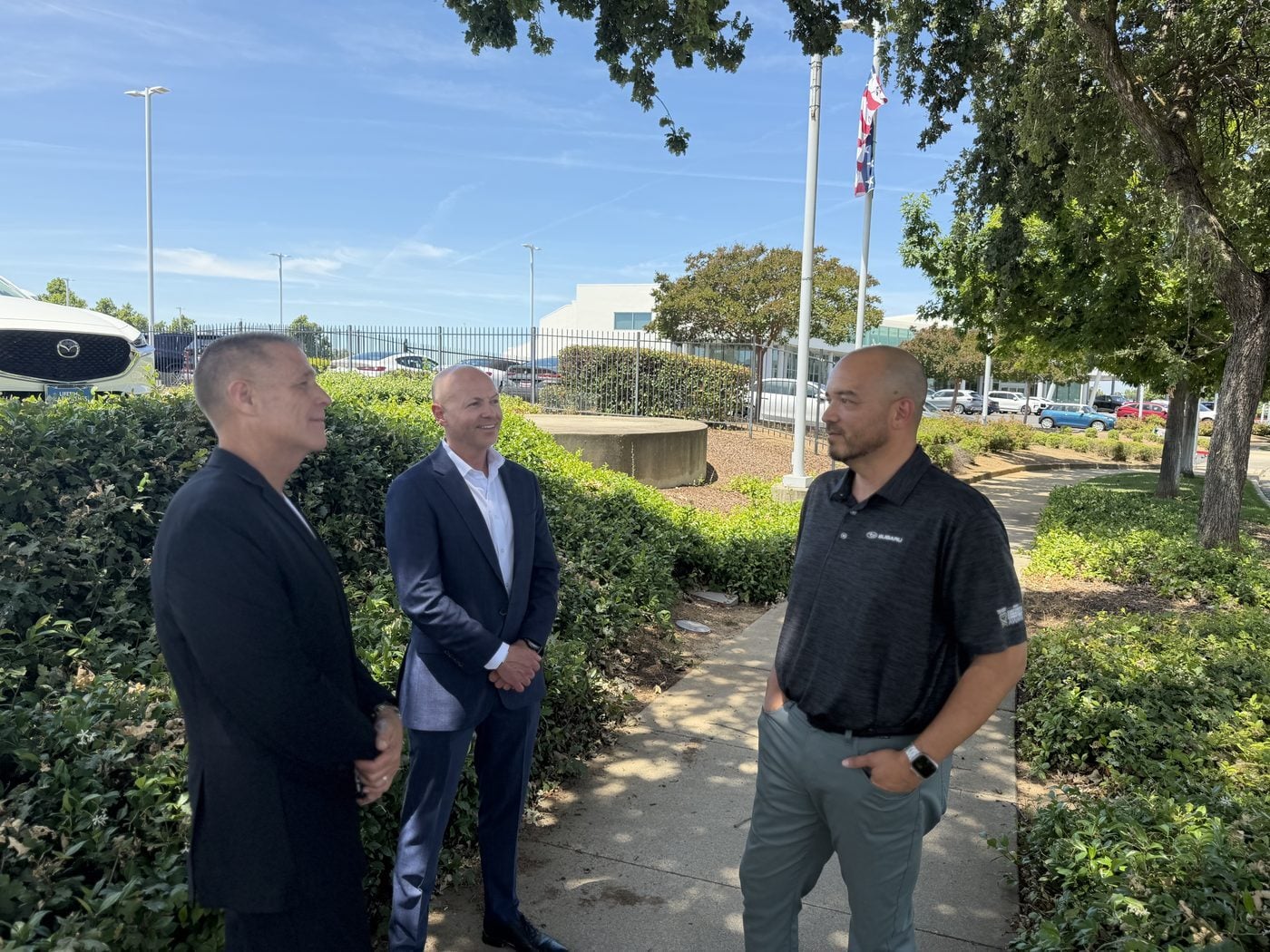
The 86-car month is the floor, not the ceiling. The new store breaks ground on eight acres in July 2026, with an expanded display and a dedicated buy center — the physical form of the keystone. Charlie is working on additional parking and service capacity nearby to absorb the volume the current shop has already outgrown.
“I already know their blueprint. That can be us. We just need more inventory.”
A store across the auto mall sells 600 used cars a month. Charlie isn’t pretending it’s more complicated than that. It starts — and keeps starting — with the right inventory at the right price.
Ready to get started?
