



"I don't think there is one source that can compete with private party purchases when done right,"...
Capitalize on EVs: How Rising Gas Prices Create New Opportunities

Clayton Dorris
5
min. read
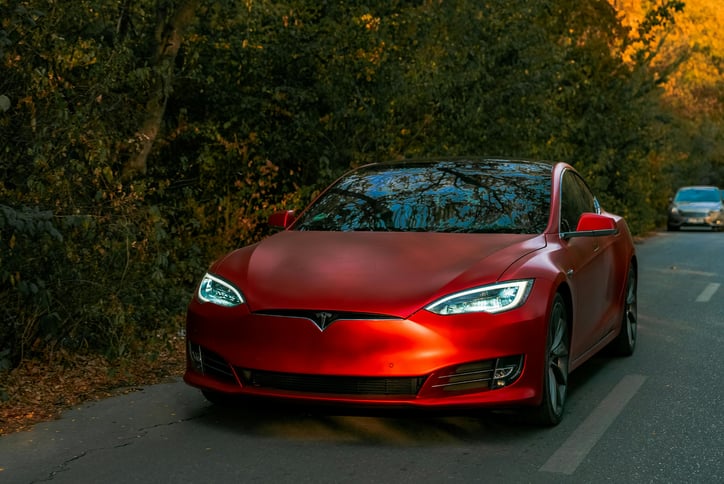
Capitalize on EVs: How Rising Gas Prices Create New Opportunities
9:30
Don't Turn That Tesla Away: Why Rising Gas Prices Are a Buying Center Opportunity You Can't Ignore
Insights from Susan O'Rourke, VP of Sales & Business Development, Plug.vin
If you run a buying center in the Midwest, the South, or anywhere gas prices have historically kept EVs off your radar: your market just changed overnight.
With gas now averaging over $4.53 nationally and prices up nearly 50% since the conflict with Iran began, consumer psychology around EVs has shifted decisively. The phones are ringing. The trade-ins are different. And the used EVs sitting in your lane at auction or arriving as trade-ins in your service drive are no longer niche assets. They're fast-moving inventory.
The question isn't whether EVs belong in your buying strategy. It's whether you're equipped to capitalize on the opportunity before someone else does.
What the Market Is Actually Telling You
Susan O'Rourke, VP of Sales & Business Development at Plug.vin, has seen this pattern before and she's watching it play out right now.
"People are really looking for an electric vehicle not just because of gas prices, but also because of the technology, the experience, the driving capabilities," O'Rourke says. "But anytime gas prices go up, you see a spike in EV sales. That's just the pattern."
The data backs it up. Used EV sales jumped 27.7% year-over-year in March 2026 and are up 12% for Q1, even as new EV sales dropped 28% over the same period. The average used EV now sits at just $1,102 more than the average used gas-powered car. Used Teslas have actually rebounded in value, up roughly 4% from their 2025 lows, even as the broader used EV market normalized.
That's not a coincidence. That's the market pricing in a new reality.
"But We're Not an EV Store"
We hear this all the time. Dealers outside the coasts, particularly in the Midwest and parts of the South, have been skeptical of EVs for years. Some got burned holding new EV inventory during the tax credit era. Others never had the customer base.
But O'Rourke has a counterintuitive take: those markets may actually be better positioned for used EV retail than they think.
"The Midwest, parts of the South, those are actually perfect markets for used EVs, especially for what I'd call the self-reliant customer," she says. "Most of those people own or rent homes where they can charge. Electricity is relatively cheap. The payment makes sense. You can get a used EV comparable to a gas vehicle on monthly cost, with no maintenance and no gas."
The real obstacle isn't the customer. It's the dealer's hesitation to price, acquire, and move the vehicle with confidence.
Solving the Exit Strategy Problem
The most common objection we hear from buying centers goes something like this: "What if I buy a Tesla today and gas prices drop by next week?"
It's a fair concern. And it's exactly the problem Plug.vin was built to address.
"You don't want to go out and buy a Tesla for $3K over market just because gas prices are crazy," O'Rourke says. "You want to buy smart and not have to take a loss the next week because you overpaid."
Plug.vin functions as a guaranteed exit strategy for dealers acquiring EVs they don't plan to retail:
- Instant cash offer. Submit vehicle information and receive a firm offer valid for five business days, giving you enough runway to work the trade or retail the deal before committing.
- EV-specific pricing intelligence. Plug factors in battery health, software features, warranty status, drivetrain configuration, and real-time auction data, none of which traditional VIN decoders reliably capture.
- Remote verification. Because EVs have fewer moving parts and their key data lives in the vehicle's software, Plug can verify and price a car from photos and a screen capture alone. A dealer in Florida can confidently acquire a car in California without ever physically inspecting it.
"Dealers will sometimes tell us, 'You were going to offer $2K more than what I was going to offer,'" O'Rourke says. "And they were able to make a deal because of it."
What You're Probably Missing in the Appraisal Lane
Standard VIN decoders weren't built for EVs. That gap costs dealers money in both directions: either overpaying for underspecced vehicles, or walking away from deals they should have made.
O'Rourke flagged the most common blind spots:
- Battery pack size. Standard vs. extended range packs differ significantly in value. VIN decoders often miss it.
- Software features. Full self-driving capability, hardware generation (Tesla HW3 vs. HW4), and autonomous driving packages live in the vehicle, not the VIN.
- Drivetrain configuration. Rear-wheel vs. all-wheel drive isn't always decoded correctly, and it matters for pricing.
- Active warranties. Most EVs carry an 8-year/100,000-mile battery warranty. Knowing what's still in force changes the deal. Battery failure rates are less than 1%.
"A lot of the VIN decoders don't actually decode EVs properly," O'Rourke says. "Especially on high-ticket items."
The fix is straightforward: take a photo of the vehicle's software screen. For Teslas, Rivians, and Lucids, everything you need is right there.
The Lease Return Wave Is Coming, and It's an Opportunity
The $7,500 federal EV tax credit expired in September 2025, and what happened next surprised a lot of people. Rather than values cratering, used Tesla prices actually went up. The subsidy had been compressing residuals all along, and its removal leveled the playing field.
Now, the IRA-era lease boom of 2023 and 2024 is unwinding. EV lease returns are projected to surge 230% in 2026 versus 2025. That means a wave of relatively young, well-conditioned used EVs, including Chevrolet Equinoxes, Hyundai IONIQ 5s, and BMW i-series models, is about to hit the market at accessible price points.
"Get some of the really popular brands, the Equinox, the IONIQ 5, where you can get them in the low 20s or sub-20s, and try them out," O'Rourke advises. "Don't go out and buy 10 or 15 right away. See where the market is in your area first. But don't be afraid of the Teslas. The used Tesla market is extremely strong right now."
The Cash for Clunkers Moment
If you were in the car business in 2008 and 2009, you remember what happened when fuel hit $4 a gallon for the first time.
Heavy trucks and SUVs flooded buying centers. Nobody wanted them. Meanwhile, fuel-efficient vehicles appraised above market. A same-year, same-mileage RAV4 could out-appraise a Sequoia. The market spoke clearly: when gas gets expensive, efficiency gets valuable.
This moment has that same energy, but with a technological dimension layered on top. EVs aren't just fuel-efficient. They're software-defined platforms with loyal, enthusiast ownership bases. Tesla buyers trade up the way iPhone users do: willingly, frequently, and often with positive equity in hand.
"We see people with their Tesla leases now, trading in the leases, and they're in positive equity positions, which, like, never happens," O'Rourke says. "People are interested in exploring EVs now more than ever, just because they've been more exposed to them and gas prices are pushing them there."
Where to Start
If you've never bought an EV at your buying center, or if you got burned before and stepped away, here's a practical starting point:
- Don't turn the trade away. When a customer walks in with a used EV, get an offer from Plug.vin before you say no. It takes minutes and it's good for five business days.
- Learn the screen, not just the VIN. A quick photo of the vehicle's software display tells you more than most appraisal tools.
- Start with one. Find one salesperson who drives or understands EVs and let them own the process. The dealers that succeed are the ones with an internal advocate.
- Think about the wholesale exit. You don't have to retail every EV you acquire. A platform like Plug.vin is purpose-built to give you a fair market price and move the unit fast. They've facilitated over $20 million in used EV sales since launching in 2023.
- Watch the lease return market. The next 12 months will bring more affordable, well-conditioned used EVs than any prior year. Positioning now means you're ready when inventory peaks.
The Bottom Line
Gas prices changed the calculus for millions of car shoppers overnight. The buying center opportunity in used EVs is real, it's here now, and it doesn't require you to become an EV dealership to take advantage of it.
The tools exist to price them accurately. The market exists to move them quickly. A partner like Plug.vin exists to de-risk the exit.
The only thing left is to stop turning that Tesla away.
Vehicle Acquisition Network (VAN) is the leading consumer vehicle acquisition platform for dealer buying centers across North America. To learn more about how VAN helps dealers acquire more vehicles from the public, visit buywithvan.com.
Susan O'Rourke is VP of Sales & Business Development at Plug.vin, the only wholesale auction built specifically for electric vehicles.
![Closing the Gap in Vehicle Worth with Private Sellers [VIDEO]](https://www.buywithvan.com/hs-fs/hubfs/Imported_Blog_Media/van-blog-closing-gap.png?height=500&name=van-blog-closing-gap.png)